Family site
Family site
Family site



If you're comparing IT outsourcing vendors by brand recognition, you're optimizing for the wrong variable. Accenture and Tata Consultancy Services (TCS) are impressive companies. But "impressive" isn't the same as "right for your engagement": a 600,000-person systems integrator and an 80-person specialist can both be the correct choice, depending on what you're actually buying.
This list covers 11 providers spanning enterprise transformation, software and product engineering, nearshore delivery (teams based in a nearby time zone rather than the client's own country), and specialist engineering, from Vietnam-based GMO-Z.com RUNSYSTEM to Big Four-adjacent giants like Accenture and TCS. Each profile answers one question: who should actually shortlist this company, and who shouldn't? The comparison runs on best-for fit, delivery model, geography, scale, and key strength, not a single best-to-worst ranking.
Back to topThe table below summarizes all 11 providers by what each is best for, how it delivers, where it delivers from, and what to weigh before shortlisting it:
Company | Best for | Delivery model | Primary delivery footprint | Company scale | Key strength |
GMO-Z.com RUNSYSTEM | Japan/APAC-aligned offshore software development | Dedicated team, project-based | Vietnam + Japan/APAC | Mid-to-large engineering organization | Vietnam engineering plus Japanese delivery experience |
Accenture | Enterprise-wide transformation | Managed/outcome-based | Global | Enterprise giant | Scale and breadth |
TCS | Large global outsourcing programs | Managed services/dedicated delivery | Global | Enterprise giant | Hyperscale delivery |
Cognizant | Regulated enterprises and modernization | Managed/hybrid | Global | Enterprise giant | Industry depth |
EPAM Systems | Complex product and platform engineering | Dedicated/managed engineering | Global | Large engineering firm | Engineering depth |
Globant | Digital products and nearshore transformation | Nearshore/managed delivery | Americas + global | Large | Digital experience plus nearshore |
HCLTech | Enterprise applications, cloud and infrastructure | Managed services | Global | Enterprise giant | IT operations breadth |
Infosys | Enterprise modernization | Managed/offshore/hybrid | Global | Enterprise giant | Global delivery maturity |
BairesDev | US-aligned nearshore engineering capacity | Staff augmentation/dedicated teams | Latin America | Large nearshore provider | Time-zone alignment |
N-iX | European engineering and team extension | Dedicated/staff augmentation | CEE + global | Mid-large | Engineering specialization |
SoftServe | Cloud, data, AI and digital engineering | Dedicated/managed engineering | Europe + Americas | Large | Specialized technology capabilities |
This table answers one question only: who are the options, and what is each one broadly best at. It deliberately leaves out pricing, certifications, and detailed headcount, because those details vary by engagement and belong in the profiles below, not in a single scannable row.
Back to topNo single authoritative "best overall IT outsourcing provider" ranking exists. Gartner's Magic Quadrants, Everest Group's PEAK Matrix, and ISG's Provider Lens all segment by service category instead (data center outsourcing, digital workplace services, and insurance digital engineering), according to Everest Group. So this shortlist works differently: it prioritizes providers with evidence of mature IT delivery, international client experience, scalable engagement models, and clear specialization, matched against distinct outsourcing scenarios rather than ranked best to worst.
Five criteria shaped inclusion:
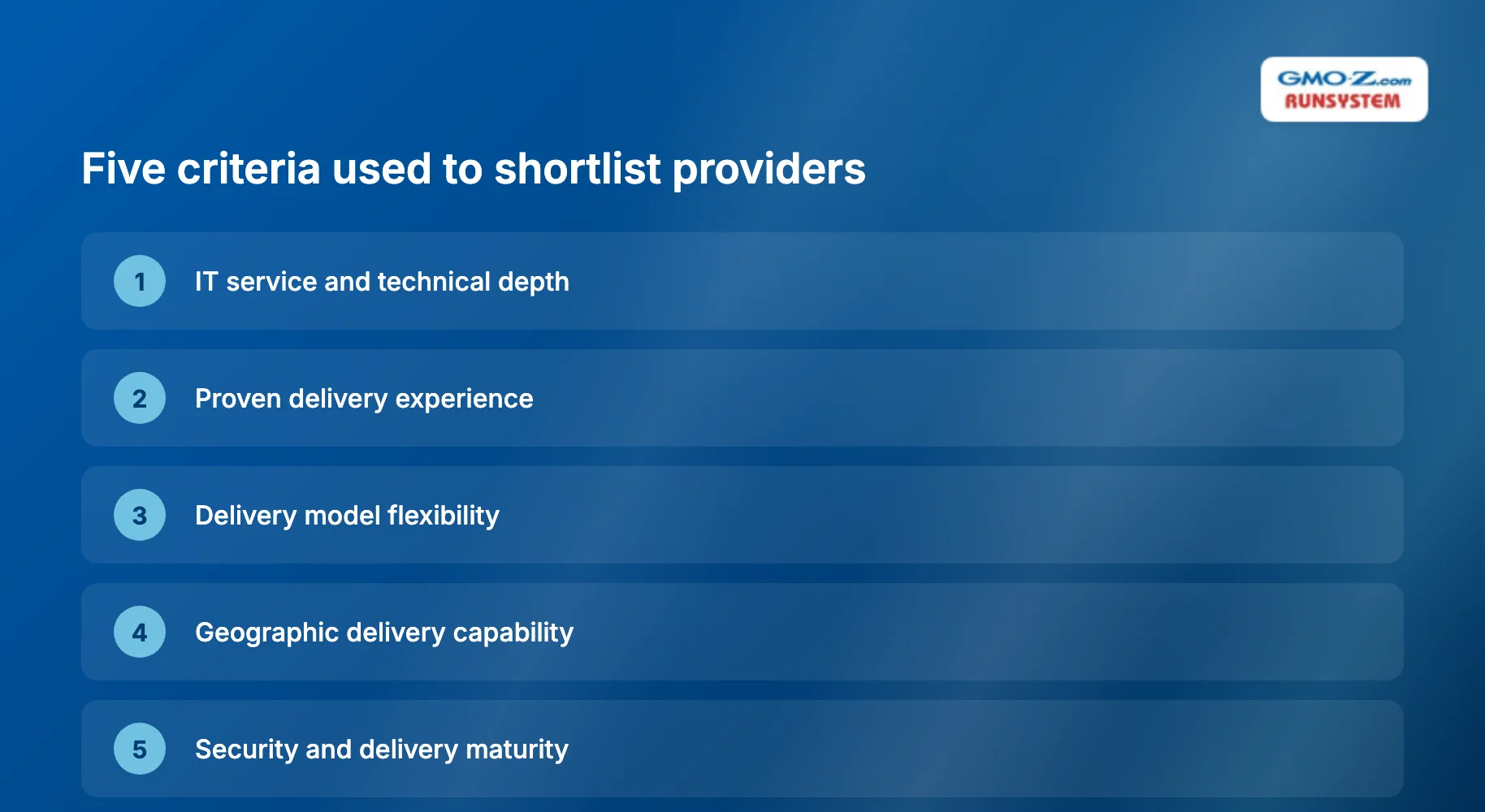
Scale was treated as a filter, not a ranking factor: each provider is assessed on whether its scale matches the engagement it targets, so a 600,000-person integrator and an 80-person specialist can both pass this bar, for different reasons. A global systems integrator isn't automatically better than a specialist, and a lower-cost provider isn't automatically better value.
This is a snapshot of 2026, not a permanent hierarchy; rankings may shift as capabilities and delivery footprints evolve. The next step is matching that criteria list against what your specific engagement needs are, covered by profile by profile below.
Back to top
Every profile below follows the same structure: what the company is best for, why it stands out, the main consideration before committing, and who should skip it. That consistency is deliberate, so you can compare providers on the same basis instead of reading 11 disconnected sales pitches.
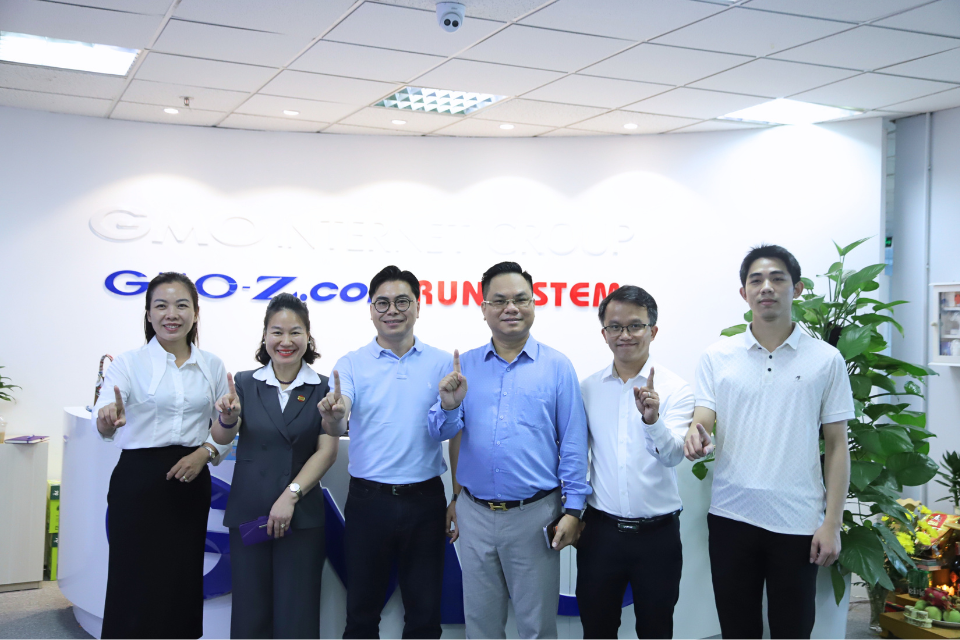
Buyers needing Japan-aligned delivery often have to choose between a Japan-based boutique charging premium rates or an offshore vendor with no real Japan market experience. GMO-Z.com RUNSYSTEM sits between those two: a Vietnam-based technology and outsourcing provider with long-standing delivery experience in Japan and other international markets, founded in 2005 and a member of GMO Internet Group since 2011, with over 20 years of technology delivery experience, according to GMO-Z.com RUNSYSTEM's company history.
Here's what that track record breaks down to:
Accenture reported $69.7 billion in fiscal year 2025 revenue, according to Accenture's FY2025 results, and roughly 799,000 employees globally as of Q3 FY26, according to Accenture's fact sheet, making it one of the largest technology and consulting firms in the world.
At that scale, here's how it fits into a shortlist:
TCS crossed $30 billion in annual revenue in fiscal year 2025, with more than 607,000 consultants delivering from 55 countries, according to TCS's Q4 FY2025 results.
The numbers behind that scale:
Cognizant, founded in 1994 in Chennai, reported $21.1 billion in full-year 2025 revenue with 351,600 employees, according to Cognizant's Q4 2025 results.
Where it fits, and where it doesn't:
EPAM Systems, founded in 1993 with dual roots in New Jersey and Minsk, reported $5.46 billion in full-year 2025 revenue, up 15.4% year over year, according to EPAM's Q4 2025 results. The company is widely credited with establishing digital product engineering as a category.
A quick profile:
Globant, founded in 2003 in Buenos Aires, reported $2.45 billion in full-year 2025 revenue, its highest ever, according to Globant's Q4 2025 results. Most of that revenue comes from North American clients, with Latin America and Europe making up the rest, a mix that reflects its nearshore delivery model.
That mix breaks down like this:
HCLTech, founded in 1976 and headquartered in India, reports more than 223,000 employees across 60 countries, according to HCLTech's company overview.
Positioned toward organizations that need both application development and operational IT management:
Infosys, founded in 1981 in Bangalore, reported $19.28 billion in fiscal year 2025 revenue with 323,578 employees, according to Infosys's FY2025 annual filing. The company is widely credited as an early pioneer of the global delivery model, a distributed, follow-the-sun approach to offshore delivery that much of the industry later adopted.
Four decades in, this is what it offers today:
BairesDev, founded in 2009 in Buenos Aires, positions itself as a nearshore software development and staff augmentation provider, with engineers based across Argentina, Brazil, Colombia, and Mexico that the company says typically work within zero to three hours of US time zones. Reported headcount varies by source, with the company citing thousands of engineers across multiple countries.
Put simply:
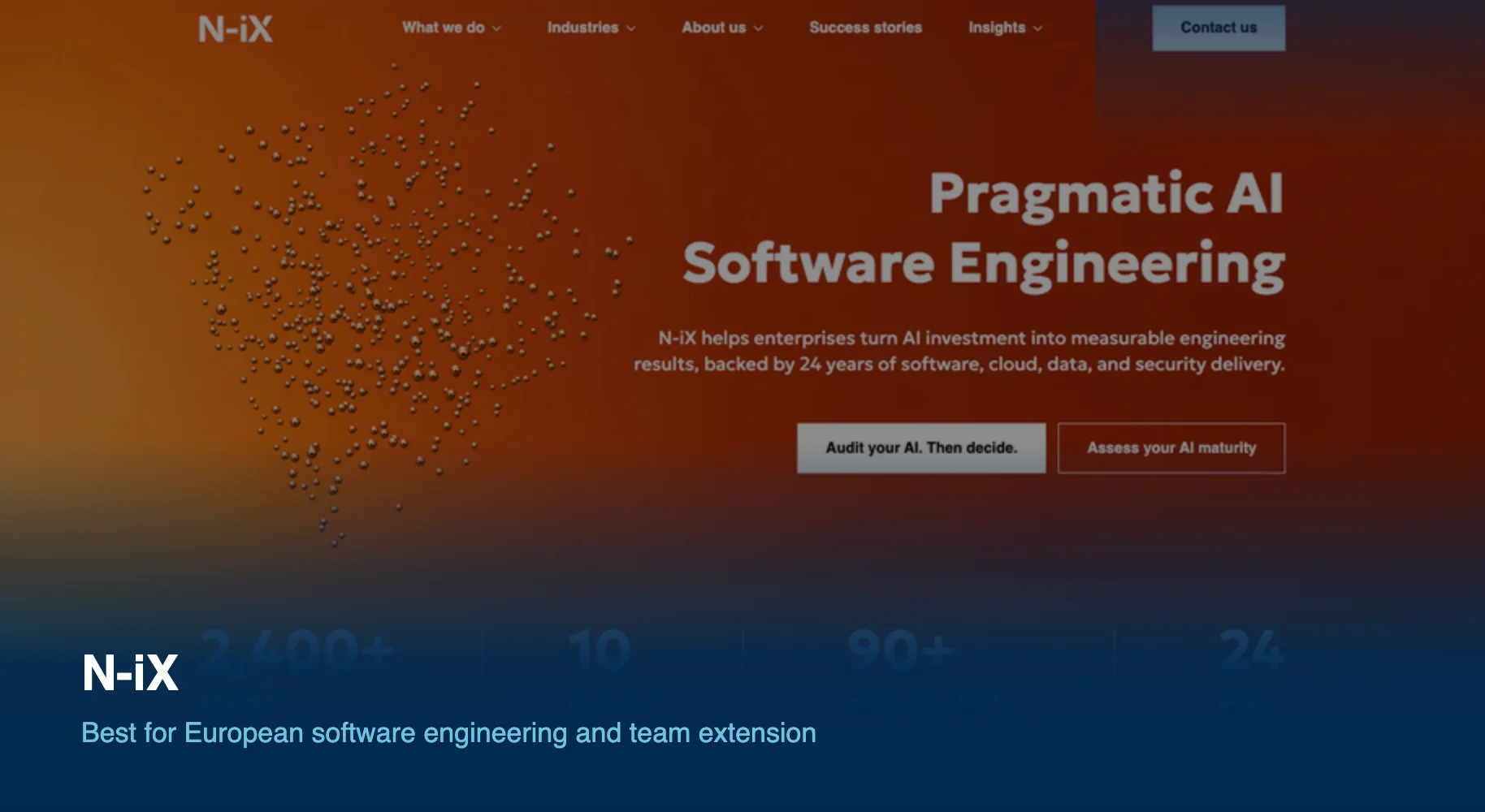
N-iX, founded in 2002 in Lviv, Ukraine, has grown to more than 2,400 professionals delivering from Ukraine, Poland, and Bulgaria, according to N-iX's company overview. The company was among the co-founders of the Lviv IT Cluster in 2009, an industry association that helped establish the region as a software engineering hub.
The fit, in brief:
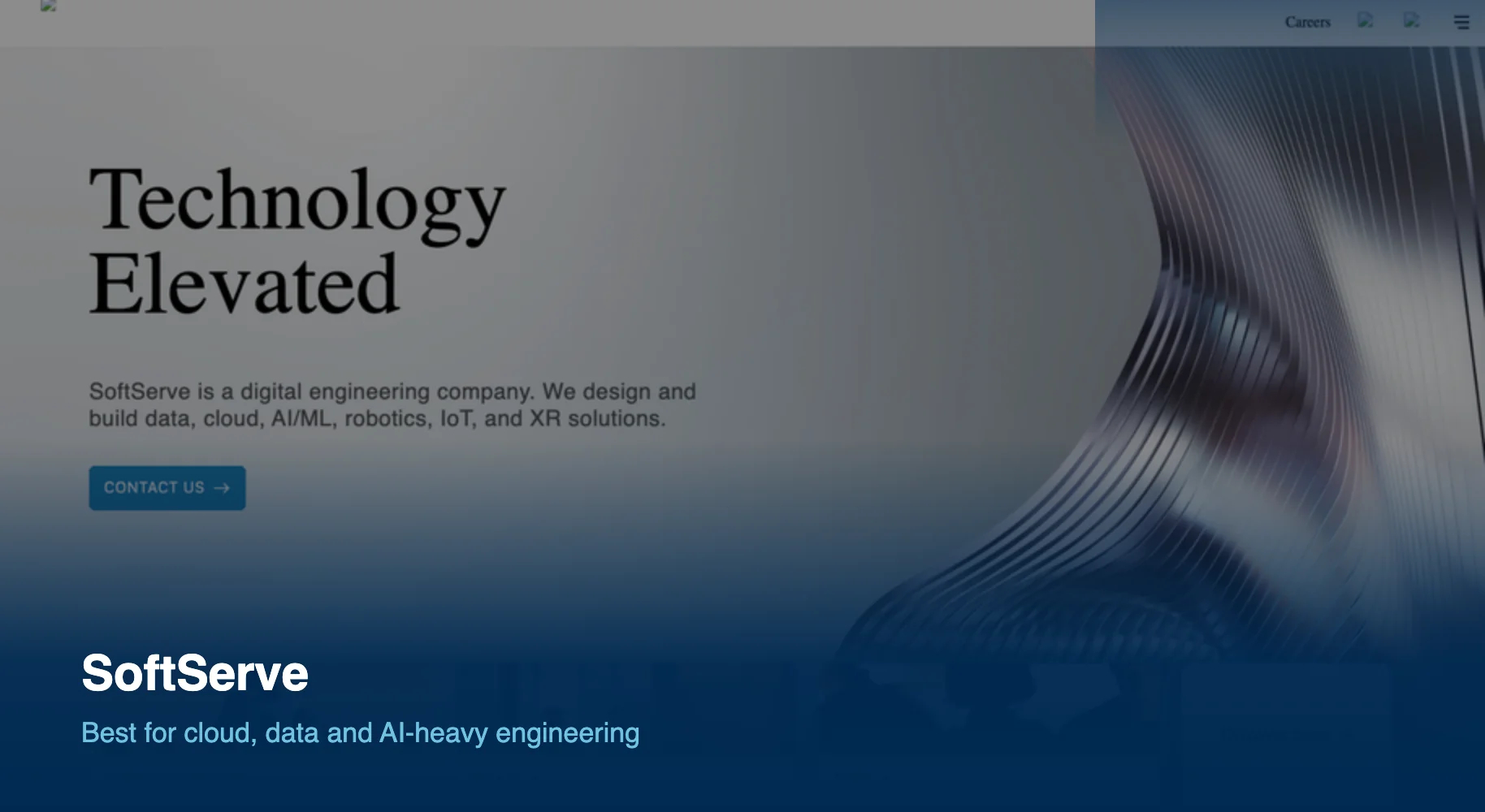
SoftServe, founded in 1993 in Lviv, Ukraine, operates with dual headquarters in Lviv and Austin, Texas, and employs more than 10,000 people across 54 offices in 17 countries, according to SoftServe's company overview.
That footprint centers on specialized technology capability rather than general-purpose staffing:
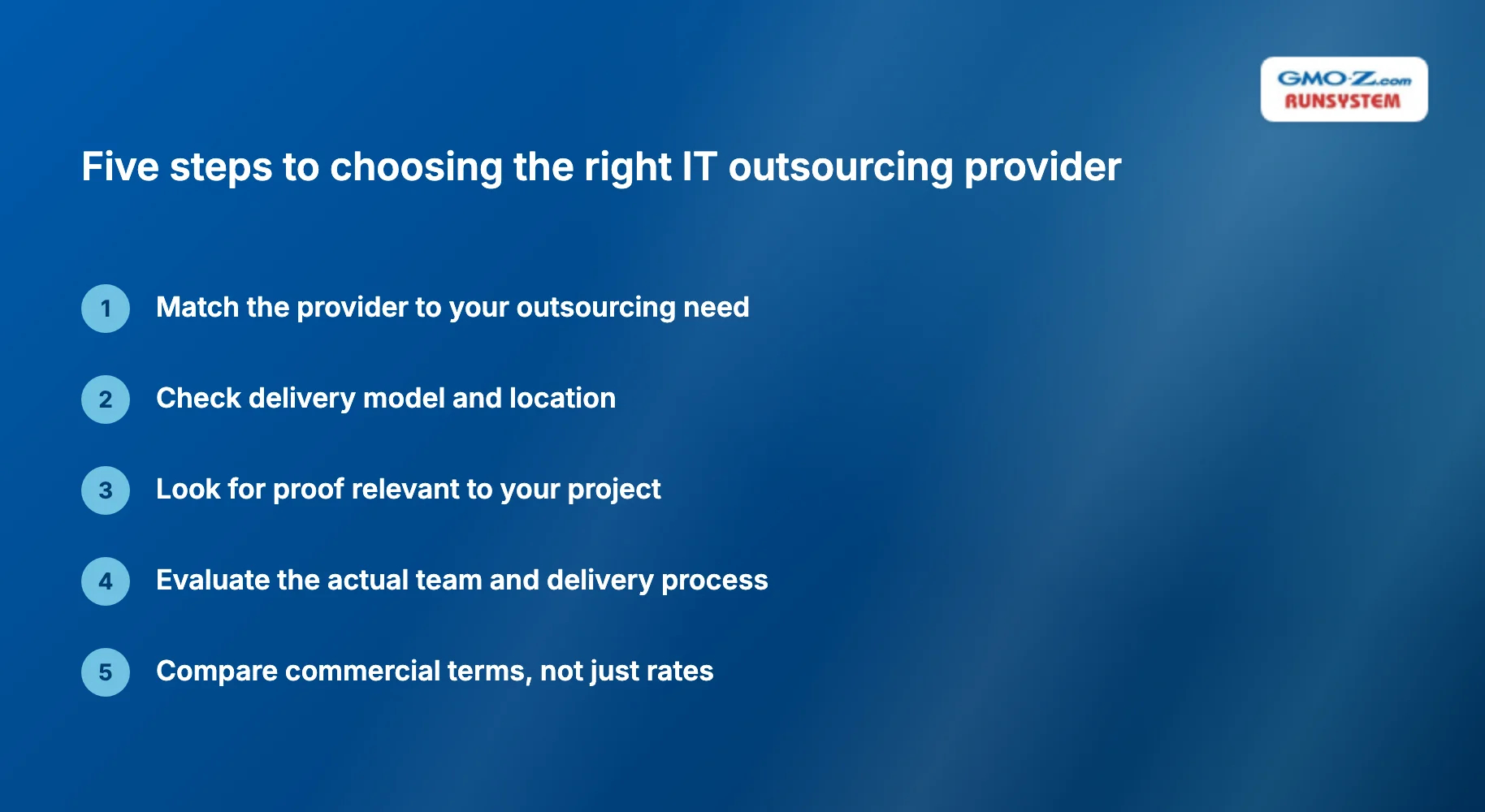
Comparing 11 strong providers doesn't tell you which one to pick. That decision comes down to matching provider characteristics to your specific engagement, not picking the most recognizable name on the list.
Start with what you actually need, since different needs prioritize different provider strengths:
Need | Prioritize |
Staff augmentation | Talent availability, speed, team integration |
Product development | Engineering depth, architecture, QA |
Enterprise transformation | Scale, consulting, governance |
Managed IT | SLA (service-level agreement, the contracted uptime/performance guarantee), infrastructure, security |
Cloud/data/AI | Relevant technical specialization |
Two things to confirm before anything else:
Pick based on the problem you actually have, not the one that sounds better in a pitch deck.
Don't rely on brand recognition alone. Check for similar case studies, relevant industry and technology experience, client references, and the experience level of the specific team that would be proposed for your engagement.
Prioritize evidence from projects similar to yours in scope, complexity, and delivery model. A provider with impressive logos in industries unrelated to yours tells you less than a smaller provider with three case studies that match your exact situation.
Where possible, meet the technical lead, project manager, and key engineers who would work on your project, not just the sales team. Assess their technical capability, communication clarity, sense of delivery ownership, and willingness to challenge your requirements when something doesn't make sense. A team that agrees with every request you make is a warning sign, not a strength.
Also verify security and intellectual property controls directly, rather than accepting a general assurance.
Compare vendors on the same basis: team composition, scope, what management is included, minimum commitment, replacement terms if an engineer leaves, rate change policies, and exit or transition support. The best provider is the one with the strongest fit across capability, delivery model, collaboration style, risk, and total cost, rather than the one with the lowest hourly rate.
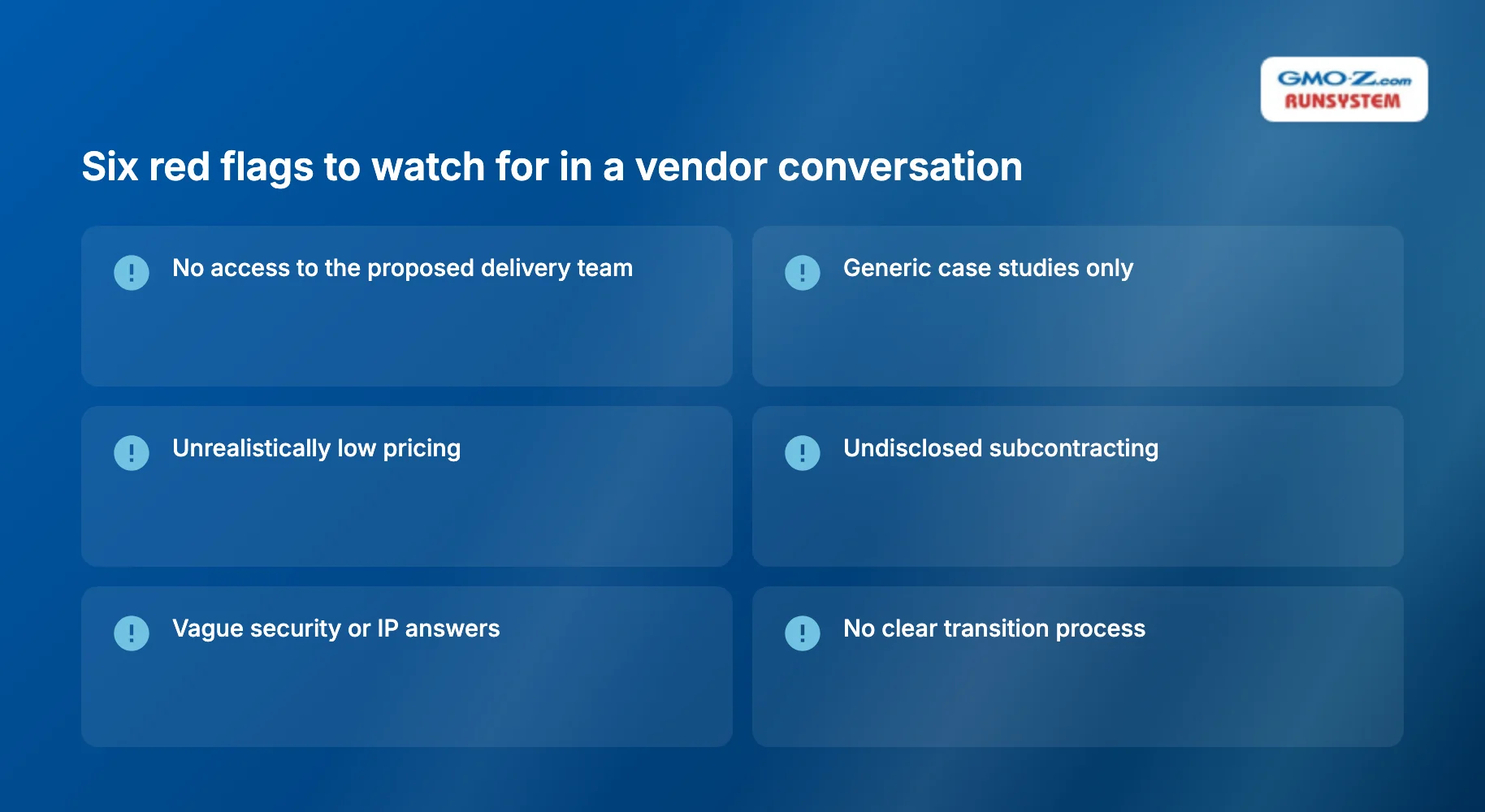
A short list of red flags is worth watching for across every vendor conversation:
IT outsourcing prices vary mainly by location, engineer seniority, technical specialization, team size, engagement model, and how much delivery ownership the vendor takes on. There's no single market rate, because these six variables interact differently for every engagement.
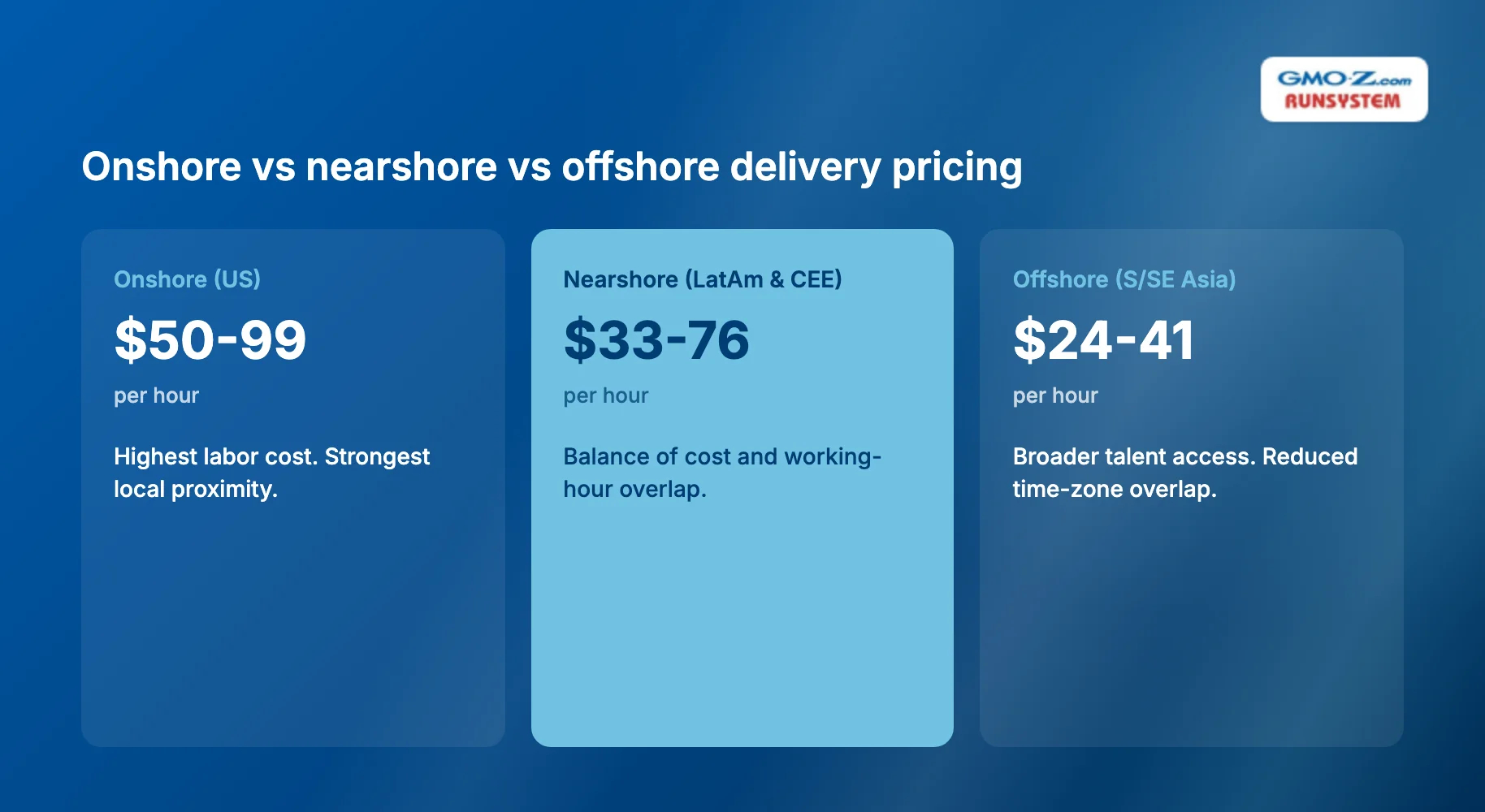
Rates cluster into three tiers by delivery location:
One trend from 2025, per the same Accelerance guide: offshore Asia rates declined faster than nearshore Latin America rates did, roughly 8% year over year against 7.1%, though both fell enough to narrow the gap that used to favor offshore more clearly on cost. That means geography alone is a weaker cost signal than it used to be; delivery model and seniority now explain more of the price difference than region does.
A cheaper developer rate doesn't necessarily mean a cheaper engagement. Total outsourcing cost adds up several line items beyond the hourly rate:
A team billing 20% less per hour but requiring twice the management oversight or producing code that needs significant rework isn't actually the cheaper option once those costs are counted.
Also check commercial terms beyond the headline rate: minimum engagement length, project-management fees, overtime policy, rate revision clauses, replacement costs if an engineer needs to be swapped, and termination terms. The useful comparison is total delivery cost against expected outcome, not hourly rate in isolation.
Back to top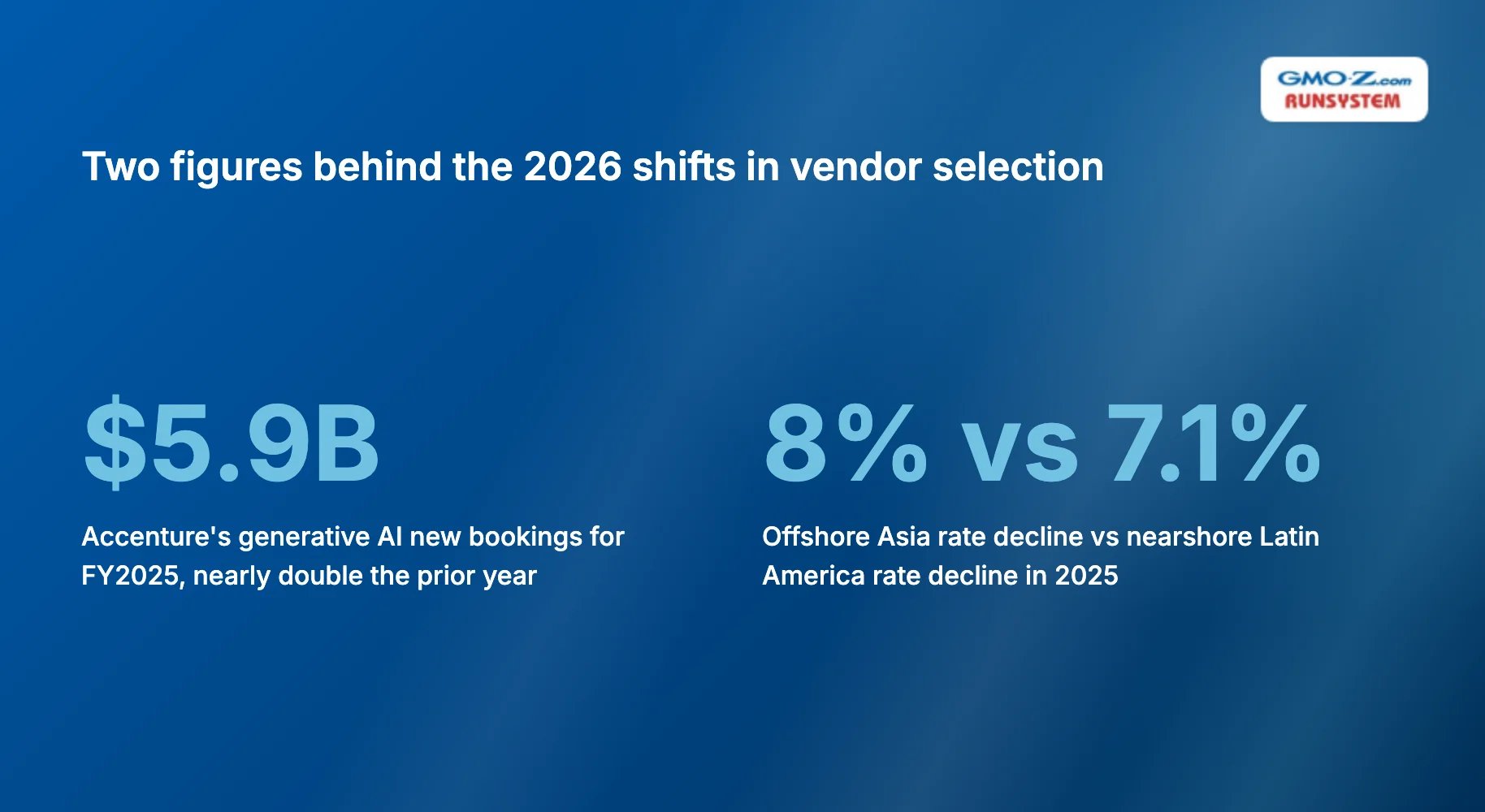
Two shifts are changing how the fit-over-scale logic above plays out in practice this year, and both make provider selection less about brand size than it was even two years ago.
Buyers who select by brand recognition alone usually don't discover the mismatch until after the engagement starts. A governance-heavy program built for enterprise-scale delivery turns a three-month product build into a nine-month one; a boutique specialist ends up buried under a transformation program too large for its delivery model to absorb. Either way, that mismatch costs more in rework, timeline slippage, and internal management overhead than the extra week it takes to properly vet fit before signing.
The 11 providers in this list solve genuinely different problems, from full enterprise transformation to lean team extension. If your engagement calls for Japan/APAC-aligned offshore delivery with an established quality and security framework, rather than the overhead of an enterprise giant, talk to GMO-Z.com RUNSYSTEM's team about which delivery model fits your project (scope and pricing vary by engagement; contact RunSystem for a quote).
Back to top
Onboarding typically ranges from two to six weeks, depending on team size, required skills, security and access setup, and the provider's available talent. Adding two or three engineers to an existing team moves faster. Launching a full dedicated team from scratch takes longer, since it needs recruiting, onboarding, and process alignment.
Yes, when it's a first-time vendor relationship or technically complex work, since a pilot validates communication quality and delivery capability before you commit budget at scale. A very small pilot (one engineer, a few weeks) may not accurately represent how a larger, long-term team actually performs.
It depends on the engagement type: a short fixed-scope project might run weeks to months, a team extension typically runs 6 to 12 months, and multi-year managed services or dedicated development arrangements are common for ongoing platforms. Build in review and exit points regardless of length, rather than relying only on the initial term.
Focus on outcomes, not headcount: delivery predictability, cycle time, defect rate, SLA compliance, deployment frequency, team stability, and customer or user outcomes where applicable. Hours worked or number of developers assigned are weak success metrics, since they measure activity, not delivery quality.
A single provider gives simpler governance and more concentrated institutional knowledge, which suits most mid-size engagements. Multiple providers give access to specialized capabilities and reduce dependency on any one of them, but that comes at the cost of greater coordination complexity. The trade-off usually favors a single provider unless you have genuinely distinct specialist needs.
Back to top