Family site
Family site
Family site




A CRM database is a critical foundation that allows companies to systematically store and manage customer data, streamline sales and marketing efforts, and improve customer care. In this article, GMO-Z.com RUNSYSTEM will walk you through what a CRM database is, how it works, and the key benefits it delivers to modern businesses.
Quick summary:
|
A CRM database (Customer Relationship Management database) is a centralized system that stores all customer information, including personal data, interaction history, transaction records, and behavioral data. This enables businesses to manage customer relationships consistently and efficiently.
In simple terms, this section answers the common question: what is a CRM database / what is CRM database.
Modern CRM database systems automatically collect, organize, and synchronize data, helping businesses avoid fragmented information across multiple tools and spreadsheets. This is a critical part of aligning CRM processes and data across departments.

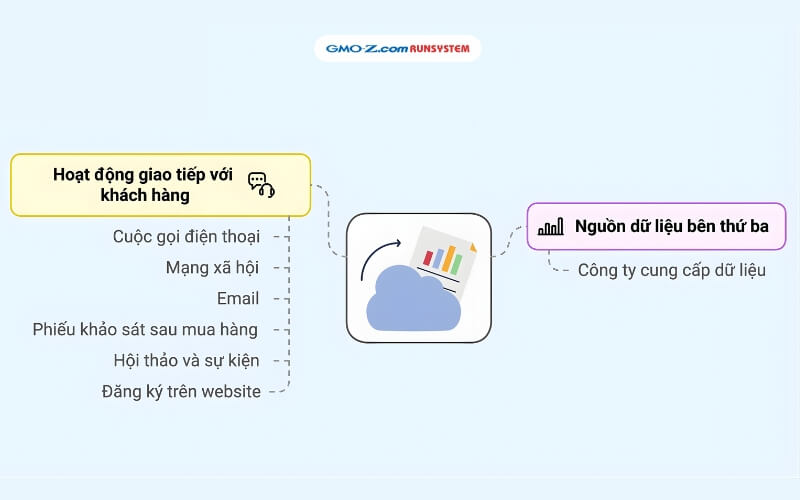
A CRM database plays a vital role in optimizing business strategy and enhancing the customer experience. CRM data is primarily collected in two ways: direct customer interactions and third-party data sources.
Related article: What Is CRM? A Simple Definition That 99% of Vietnamese Businesses Misunderstand
If these processes are not managed properly, businesses may end up with bad CRM data, which negatively impacts decision-making and performance.
2) Data collected from third-party sources
Businesses can also leverage external data sources, such as demographic information, purchasing behavior, and interest-based data provided by professional data vendors. When integrated into CRM and database systems, this data helps expand customer reach and improve targeting accuracy.
By combining first-party data with third-party data, companies can build a comprehensive CRM database system that supports strategic decision-making, improves CRM data integrity, and drives sustainable business growth. This approach also lays the groundwork for CRM data enrichment, ensuring customer profiles remain accurate, up to date, and valuable over time.
A CRM database is a critical foundation that enables businesses to truly understand their customers, anticipate needs, personalize experiences, and optimize sales and marketing activities to increase revenue and customer retention.
Service personalization: By analyzing customer preferences and purchase history, businesses can recommend relevant products and services, improving customer experience and boosting sales. For example, Amazon increased revenue by 35% through personalized recommendations.
Revenue growth: CRM systems track customer interactions and predict purchasing trends, helping sales teams close deals faster using real-time reports and insights.
Analytics and reporting: CRM databases deliver actionable insights into campaign performance and customer segmentation, supporting strategic, data-driven decision-making based on accurate information.
CRM data also plays a crucial role in lead conversion by delivering the right message at the right time and maintaining long-term relationships through consistent management across all channels. This alignment between CRM process and data is essential for sustainable growth.

Below are the key benefits businesses gain when implementing a CRM database:
Better contact management: A CRM database centralizes all customer contact information, including emails, phone numbers, interaction history, and transaction records. This allows businesses to track and manage every touchpoint easily while avoiding missed or fragmented information.
Streamlined customer service: CRM provides a 360-degree view of the customer, enabling support teams to resolve requests, complaints, and feedback quickly while delivering consistent service across all channels.
Improved customer retention: By analyzing behavioral data, preferences, and purchase history, businesses can personalize customer experiences, design tailored engagement programs, and increase repeat purchases.
Higher sales and revenue: CRM supports opportunity tracking, demand forecasting, and sales pipeline optimization. Sales teams can close deals faster while cross-selling and upselling relevant products or services to drive revenue.
Enhanced decision-making: CRM database systems provide detailed reports and analytics on customers, markets, and campaign performance, allowing managers to make timely and accurate decisions based on real data rather than assumptions.
More targeted marketing: CRM data enables customer segmentation based on needs, behaviors, and preferences, helping businesses run highly targeted marketing campaigns that improve performance while reducing marketing costs.
AI-driven productivity and efficiency: When integrated with AI, CRM can automate workflows, analyze data at scale, predict customer behavior, and recommend sales or marketing actions. This improves CRM data integrity, reduces manual work, and allows employees to focus on higher-value strategic tasks.
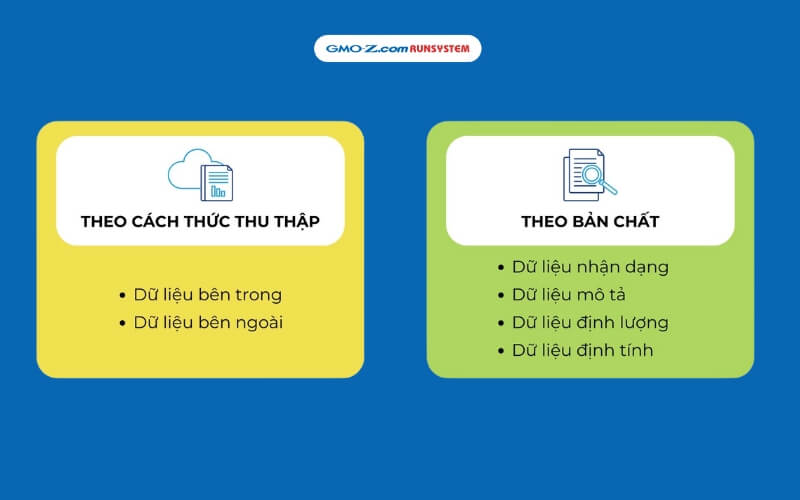
Below are the most common types of CRM databases, helping businesses classify, manage, and leverage customer information more effectively.
Internal data: This is the core data source for most CRM initiatives, collected from internal departments:
External data: This supplemental data enriches internal records and supports CRM data enrichment, including:
CRM databases can also be classified by data type, ranging from identification and descriptive data to quantitative and qualitative data.
Identification data: Includes name, date of birth, address, email, phone number, social media profiles, and personal preferences. This data supports personalized offers and customer care.
Descriptive data: Information such as education level, occupation, income, marital status, and lifestyle, helps businesses build accurate customer personas.
Quantitative data: Measurable metrics like the number of purchases, average order value, website visits, and social media engagement are used to evaluate purchasing behavior and detect trends.
Qualitative data: Includes emotions, purchase motivations, and survey feedback. This data is essential for improving service quality and enhancing the overall customer experience while minimizing bad CRM data through better interpretation and context.
Implementing a CRM database begins with data migrationa critical step to ensure that customer data is centralized, accurate, and ready for use. Below are the five essential steps to get started:
First, clearly identify which data will be migrated to the CRM, the current source systems, and the target CRM database systems where the data will be stored. At the same time, set measurable goals such as data accuracy, completeness, and consistency to support long-term CRM data integrity.
List all existing systems, including spreadsheets, legacy CRM platforms, customer support tools, or e-commerce systems. Define the specific data to be migrated, such as customer contact details, purchase history, support interactions, and product information.
Create a database schema that defines tables, data fields, and relationships between them. At this stage, data types, formats, and field constraints should also be established to ensure that data entered into the CRM database remains accurate and reliable.
Extract data from source systems, transform it to match the CRM structure, and then load it into the CRM database. This transformation process may include data cleansing, format conversion, and the addition of missing information, often supported by CRM database cleansing consultants when dealing with complex or large datasets.
After data is loaded, conduct validation checks to ensure accuracy, completeness, and consistency. Verification processes help identify errors or inconsistencies, while regular data quality audits ensure the CRM continues to operate effectively and avoids the accumulation of bad CRM data.

For a CRM database to perform effectively, continuous data optimization is essential. This ensures customer information remains accurate, complete, and easy to use. Key optimization steps include:
Duplicate records create confusion, errors, and unnecessary storage costs. Regularly review and remove duplicate entries, either manually or by using data cleansing tools, to maintain high CRM data integrity.
Integrating data from social media platforms, loyalty programs, website analytics, and other touchpoints creates a more complete view of customers and their interactions. This process supports effective CRM data enrichment and strengthens alignment between the CRM process and data.
Ensure consistent formats for dates, currencies, measurement units, and naming conventions. Standardization enhances data accuracy and streamlines analysis and reporting across CRM and database environments.
Define clear rules for data ownership, access rights, security, and acceptable use of customer data. Strong governance ensures consistency, compliance, and long-term reliability across CRM database systems.
Educate teams on the importance of accurate data and proper data entry and management procedures. Well-trained staff play a key role in preventing errors and minimizing bad CRM data at the source.
Remove outdated, incomplete, or inaccurate records on a scheduled basis. Ongoing cleanup helps preserve CRM data integrity and ensures the CRM stores only relevant and valuable information.
WOWCRM is a modern Customer Relationship Management (CRM) platform developed by GMO-Z.com RUNSYSTEM, a member of the GMO Internet Group (Japan). The system is designed to optimize sales workflows, enhance omnichannel customer experiences, and leverage data intelligence to support more effective decision-making.
360° customer data analytics: Using AI and machine learning, WOWCRM builds comprehensive customer profiles, predicts customer needs, and delivers personalized experiences based on real behavioral data.
Multi-source data synchronization: The system integrates seamlessly with Core Banking, LOS, and AML platforms, ensuring data accuracy, security, and regulatory compliance across the entire CRM and database ecosystem.
Customer journey optimization: WOWCRM tracks omnichannel interactions and helps increase customer lifetime value by 3–6 times through consistent engagement and data-driven personalization.
Process automation: Up to 90% of sales and marketing tasks are automated, reducing manual data entry time by 40% and improving overall operational efficiency across CRM processes and data workflows.
Flexible management system: Highly customizable role-based access allows businesses to manage everything from strategic objectives to detailed execution, improving marketing performance by up to 150%.
AikoAI virtual assistant: AikoAI analyzes CRM data, recommends personalized strategies, and helps sales teams double their conversion rates by acting on real-time insights.
Fast deployment and easy customization: WOWCRM features a user-friendly interface, seamless integration with existing systems, real-time reporting, and strict permission controls—making it suitable for enterprises of all sizes.
CRM database is not a standalone abbreviation. It is a combined term consisting of CRM (Customer Relationship Management) and database, referring to the centralized repository where customer data is stored and managed within a CRM system. This explanation aligns with the standard CRM database definition used globally.
CRM software pricing in 2025 is flexible and depends on the number of users and available features. Market prices typically range from VND 50,000 to VND 700,000 per user per month. Annual costs can start at around VND 120,000 per year for very basic plans and go up to VND 36 million per year for enterprise-level solutions.
CRM data refers to the complete set of customer information stored within a CRM system, including identification data, interaction behavior, purchase history, and feedback. This data helps businesses better understand customers and optimize sales, marketing, and customer service activities. Proper management of this data is essential to maintain CRM data integrity and avoid bad CRM data.
CRM is a customer relationship management system used to track customer data, sales activities, marketing campaigns, and customer service in order to increase revenue and satisfaction.
ERP (Enterprise Resource Planning) is a system designed to manage internal operations such as finance, human resources, manufacturing, and supply chain activities on a unified platform.
A CRM database can be stored either in Vietnam or overseas, depending on the deployment model and software provider. Many businesses prefer domestic data storage to ensure performance, legal compliance, and security under Decree 13/2023/ND-CP on personal data protection. Meanwhile, some international CRM platforms host data on servers located in the United States, Singapore, or Europe.
Yes. Most modern CRM platforms allow users to export the entire CRM database in formats such as CSV or Excel, or via APIs. This applies to global systems like HubSpot, Zoho, and Salesforce, as well as Vietnamese CRM solutions such as WOW CRM, MISA AMIS, and Bizfly. This feature enables easy data backup, auditing, or migration to another system.
No. CRM data remains the property of the business. Vendors are not allowed to retain customer data once you request data export or deletion, especially under Vietnam’s personal data protection regulations. Most CRM providers allow full data downloads before service cancellation and support permanent deletion upon request. Regular backups and contract reviews are recommended to minimize risk.
Yes. Most free CRM tools impose limits on storage capacity, number of users, or total records. For example, HubSpot’s free CRM allows up to 1 million contacts, while Zoho CRM Free limits users to only a few thousand records. Businesses that require larger storage or advanced features typically need to upgrade to paid plans.
Building and managing an effective CRM database helps businesses increase productivity, improve customer experience, and drive revenue growth. If your organization wants to optimize CRM database systems without investing excessive internal resources, WOWCRM by GMO-Z.com RUNSYSTEM offers end-to-end support—from implementation to optimization, ensuring your data remains accurate, secure, and ready for scalable CRM data enrichment.