ファミリーサイト
ファミリーサイト
ファミリーサイト



A vendor that has built ten e-commerce checkouts has not necessarily built one loan origination system. That gap is where most fintech outsourcing projects run into trouble. Definitions of "fintech" swing wildly depending on who's counting, but even the narrower fintech software market alone is worth roughly $78.79 billion in 2026, up from $73.02 billion in 2025, according to Global Growth Insights. More of that spend is going to outsourced engineering every year, not in-house teams.
Financial software carries risk; most software categories don't. A transaction-processing bug is expensive. A compliance gap is worse. A botched KYC (Know Your Customer, the identity-verification process banks and fintechs must run before onboarding a customer) rollout can stall a launch entirely, in a way a typical web app defect never does.
So choosing a fintech development partner takes more than a rate card and a list of technologies. This article compares 10 companies on evidence that actually matters here: domain experience, security and compliance proof, a delivery track record, and cost position. Shortlist by what a vendor has actually shipped, not by who put themselves at the top of their own list.
Back to topInclusion on this list required evidence specific to financial software, not general company size or review-site star ratings. A five-star review score tells you clients were happy. It doesn't tell you whether the vendor has ever reconciled a ledger or integrated a KYC provider.
The evaluation weighs named security and compliance credentials directly:
The table below summarizes the seven criteria used to evaluate each company and why each one matters specifically in fintech:
Criterion | What to evaluate | Why it matters in fintech |
Fintech domain experience | Banking, payments, lending, wealth, insurance, RegTech (regulatory technology) projects | Generic software experience does not prove financial-domain competence |
Security and compliance | ISO 27001, PCI DSS, SOC 2, KYC/AML experience, relevant regional requirements | Compliance requirements can shape system architecture from day one |
Proven delivery | Named fintech/BFSI (banking, financial services, and insurance) case studies with measurable outcomes | Confirms expertise exists beyond marketing copy |
Financial engineering depth | Payments, ledgers, reconciliation, transaction processing, fraud, identity | These workflows create engineering risk unique to fintech |
Integration capability | Payment gateways, banking APIs, open banking, KYC providers, legacy cores | Most fintech platforms depend heavily on third-party systems |
Delivery capability | Team depth, QA, DevOps, maintenance, modernization | Financial products need reliability well beyond initial launch |
Commercial fit | Rates, minimum project size, location, engagement model | Helps you shortlist realistically before the first call |
Two editorial rules governed how each profile got written. Publicly verifiable information took priority over marketing claims, with formal certifications called out separately from vague statements of "compliance expertise." And GMO-Z.com RUNSYSTEM, the publisher of this article, appears on the list - a relationship disclosed here rather than dressed up as an independent ranking.
The order below reflects category grouping, not quality. More on that next.
Back to topTen companies made this list because each one has documented, verifiable experience with a specific fintech workflow. Not because of headcount. Here's the fast shortlist view before the full profiles:
Company | Best for | Key fintech strength | Security/compliance evidence | Typical cost position | Main delivery region |
GMO-Z.com RUNSYSTEM | BFSI transformation and APAC projects | Banking, lending, KYC, open banking | ISO 27001, ISO 9001, CMMI Level 3 (verify current scope) | Competitive offshore/nearshore | Vietnam / APAC |
Kindgeek | Regulated payments and neobanking | Core payments, wallets, neobanks | 100+ regulated projects, PCI DSS-compliant delivery (verify current scope) | Mid-market | Europe |
ScienceSoft | Enterprise financial platforms | Banking, insurance, investment | ISO 9001, ISO 27001 (verify current scope) | Mid to high | US / Europe |
Itransition | Banking modernization | Enterprise financial systems | Enterprise compliance experience (verify current scope) | Mid to high | Global |
ELEKS | Complex enterprise transformation | Banking, data, cloud, AI | ISO 9001, SOC 2 (verify current scope) | Mid to high | Europe / US |
Netguru | Digital products and embedded finance | Banking UX (user experience), BaaS (Banking-as-a-Service), open banking | Relevant security capabilities (verify current scope) | Mid to high | Europe |
Django Stars | Lending and mortgage platforms | Lending workflows and financial backends | ISO 9001, ISO 14001, ISO 27001 (verify current scope) | Mid-market | Europe |
Geniusee | Open banking and data-heavy fintech | APIs, cloud, financial data | AWS Advanced Tier Partner (verify compliance certifications) | Mid-market | Europe / US |
CHI Software | Legacy modernization and AI | Financial SaaS modernization, data/AI | ISO 27001, ISO 9001 since 2021 (verify current scope) | Mid-market | Europe |
Appinventiv | Consumer-facing fintech apps | Mobile banking, payments, digital products | ISO 27001-aligned practices, CMMI Level 3 (verify current scope) | Mid-market | Global |

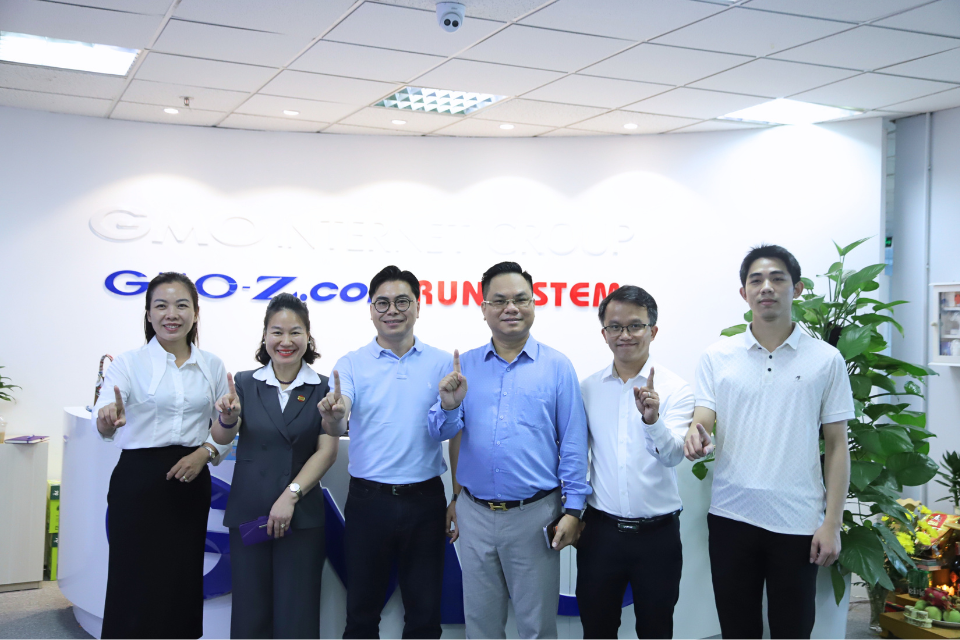
Most offshore vendors can write code. Few have shipped a loan-origination platform a bank actually put into production, which is the narrow problem facing any bank shortlisting offshore partners for a core lending system. GMO-Z.com RUNSYSTEM, a Vietnam-based technology company and member of the GMO Internet Group since 2011, has spent more than 20 years delivering software, including work in banking and other regulated industries.
Fintech capabilities: The company's BFSI work spans:
All built across a portfolio of financial-services engagements.
Compliance/security evidence: GMO-Z.com RUNSYSTEM holds ISO 9001 and CMMI Level 3 process-maturity credentials, alongside ISO/IEC 27001 information security certification. Buyers should confirm the current certification scope and audit date directly, since certification coverage can change between renewal cycles.
Proof point: Shinhan Bank Vietnam, the country's largest foreign-owned bank, deployed the company's SmartLoan platform to automate loan application review and interest-rate calculation. GMO-Z.com RUNSYSTEM describes SmartLoan as cutting typical processing time from three to five days down to three to five hours, with OCR (optical character recognition)-based document processing reaching roughly 99% accuracy. The Shinhan Bank case study itself cites a loan-approval time reduction of roughly 50%.
What to verify: Which specific team, certifications, and prior financial-system experience apply to your project and target jurisdiction. Certification scope and delivery teams vary across engagements.
A generalist offshore vendor can learn fintech on your budget, or you can hire one that already understands BFSI compliance and Vietnam/APAC delivery economics. Put GMO-Z.com RUNSYSTEM on your shortlist for that reason (scope and pricing vary by engagement; contact RunSystem for a quote).
Compliance bolted on at the end tends to show. Licensed fintechs launching a payments product need a vendor that treats compliance as an architecture decision from sprint one instead. Kindgeek, founded in 2015 and based in Lviv, Ukraine, sticks to fintech engineering rather than chasing broad horizontal development.
Fintech capabilities: Its portfolio covers:
Compliance/security evidence: Kindgeek reports supporting 100+ regulated projects and platforms that have collectively processed more than €10 billion, with PCI DSS compliance built into its delivery process, according to Kindgeek. Confirm current certification scope directly, since specific formal credentials shift as engagements and audits are renewed.
Proof point: Over a decade in production fintech delivery, and its regulated payment and neobanking platforms are live, not stuck in pilot.
What to verify: Team continuity and availability for long, multi-year programs. Regulated fintech builds rarely wrap up in a single release cycle.
A fintech label is easy to claim. Genuine enterprise scale for a full-cycle, multi-team modernization program is harder to fake, which is what established financial institutions actually need to check for. ScienceSoft, headquartered in McKinney, Texas with 750-plus employees, has operated since 1989 across banking, payments, insurance, and investment platforms
Fintech capabilities: The practice spans:
Compliance/security evidence: ScienceSoft holds ISO 9001 and ISO 27001 certification and reports experience building to PCI DSS, PSD2, SOC 2, GLBA, and GDPR requirements. Confirm current certification scope and which regulatory frameworks apply to your specific engagement before committing.
Proof point: Thirty-five-plus years of enterprise financial-software delivery, scale that smaller specialist agencies simply can't match on complex, multi-team engagements.
What to verify: The minimum viable engagement size. And whether the specific team assigned actually has direct experience in your required fintech vertical, lending, payments, or insurance, rather than general enterprise software background.
Modernizing a legacy core system is a different job than building a greenfield MVP, and it calls for a vendor built for large-scale engineering programs. Itransition, founded in 1998, runs a global team of more than 3,000 engineers across 40 countries.
Fintech capabilities: The scope includes:
Itransition has been recognized as a leading Microsoft Dynamics 365 Finance and Supply Chain Management partner, which suits banks already built on that stack. Confirm the current partnership tier and start date directly, since this claim could not be independently verified against a live Itransition source page.
Compliance/security evidence: Enterprise compliance experience across large financial-services engagements, though specific certification scope should be confirmed at contact time.
Proof point: Twenty-five-plus years delivering enterprise financial systems, with cloud and data-engineering capability layered on top of core banking modernization work.
What to verify: Whether project governance and pricing suit a smaller or faster-moving fintech team. Itransition's delivery model is built around large-scale programs, and that shows up in how engagements get structured.
Core banking, data, cybersecurity, AI: running all four workstreams at once takes a partner that can hold the threads together without losing coherence. ELEKS, founded in Lviv, Ukraine in 1991 and now also listing Tallinn, Estonia as a global headquarters address, runs a team of 2,000-plus professionals across nearly 20 locations, serving banks, insurers, investment firms, and payment companies
Fintech capabilities: The work spans:
Compliance/security evidence: ELEKS holds current ISO 9001 and ISO 27001 certification and has completed a SOC 2 Type II security audit. Confirm current certification scope and audit date directly.
Proof point: A track record across banking, insurance, and payments that spans cloud, data, cybersecurity, and AI within single client relationships. Not one narrow specialization stretched thin across ten logos.
What to verify: Cost and organizational overhead relative to smaller specialist agencies. ELEKS is built for large, multi-workstream engagements, and that scale comes at a price.
Engineering alone doesn't ship a customer-facing product that people actually want to use. Fintech startups need product strategy and UX depth sitting right alongside it. Netguru, founded in 2008 and based in Poznan, Poland, brings more than 18 years of digital-product experience to finance clients.
Fintech capabilities: The finance practice covers:
Built on a product-strategy and design practice rather than pure staff augmentation.
Compliance/security evidence: Relevant security capabilities for finance clients; confirm specific certifications and regulatory experience for your target market before committing.
Proof point: FairMoney, a leading Nigerian fintech app, worked with Netguru to integrate a multi-layered KYC system with identity verification and AML compliance across multiple countries. The client roster outside fintech includes enterprise brands like Volkswagen too, according to Netguru, a signal of delivery at enterprise scale, if not fintech depth specifically.
What to verify: Depth of experience in the exact regulatory environment your product requires. Netguru's real strength is product velocity and UX, not deep regulatory specialization, and it's worth knowing that going in.
Financial UI is the easy part. Underwriting logic and loan servicing are where lending and mortgage fintechs actually need a fluent vendor. Django Stars, founded in 2008, has grown from two founders to more than 100 software professionals.
Fintech capabilities: The niche covers:
Named projects include MoneyPark (a digital mortgage and financial-advisory platform for Switzerland) and Molo Finance (a digital-first mortgage lender in the UK).
Compliance/security evidence: Django Stars reports ISO 9001, ISO 14001, and ISO 27001 certification, according to Django Stars. Confirm current certification scope directly, since coverage can shift between audit cycles.
Proof point: Lending and mortgage workflows form the core of the company's fintech portfolio, not one project buried among many verticals. It's a narrow specialization, and it shows in the depth of the work.
What to verify: Fit, if your project is primarily payments, insurance, or another fintech vertical outside lending. That's outside the company's strongest niche.
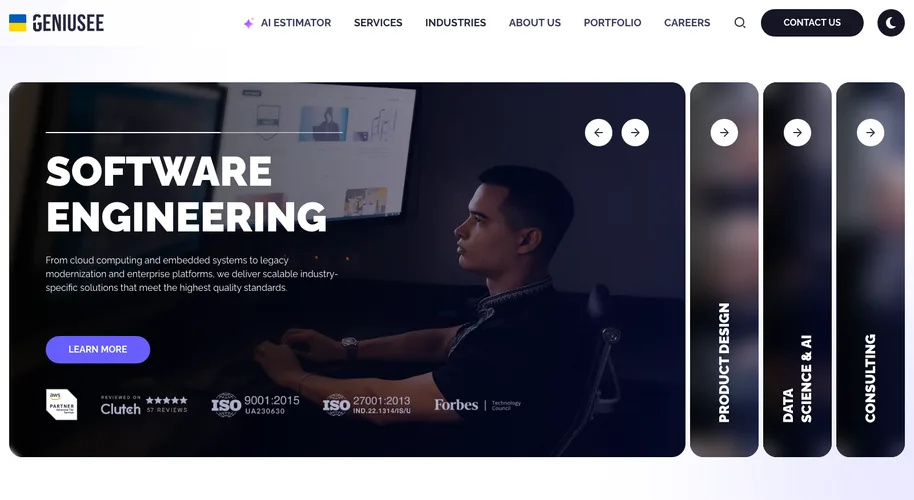
API reliability and data aggregation can make or break a product like this, and application development alone won't get you there. You need a partner built around cloud-native data engineering. Geniusee, founded in 2017 in Kyiv, Ukraine and now also maintaining a US office in Austin, Texas, runs a team of 200-plus engineers, data scientists, and cloud specialists.
Fintech capabilities: The engineering focus includes:
Drawn from 180-plus delivered projects across fintech and adjacent industries.
Compliance/security evidence: Geniusee is an AWS Advanced Tier Services Partner with multiple AWS Service Delivery Designations relevant to cloud-native financial infrastructure. That partnership tier is not itself a compliance certification, though, so verify specific compliance certifications (PCI DSS, SOC 2, or regional equivalents) relevant to your jurisdiction directly with Geniusee.
Proof point: A cloud-native, AWS-centered delivery model built around data-heavy fintech products (fraud detection, e-wallets) rather than general-purpose development.
What to verify: Depth of regulated transaction-processing experience versus data-centric fintech work. Those are different engineering disciplines, even inside the same company.
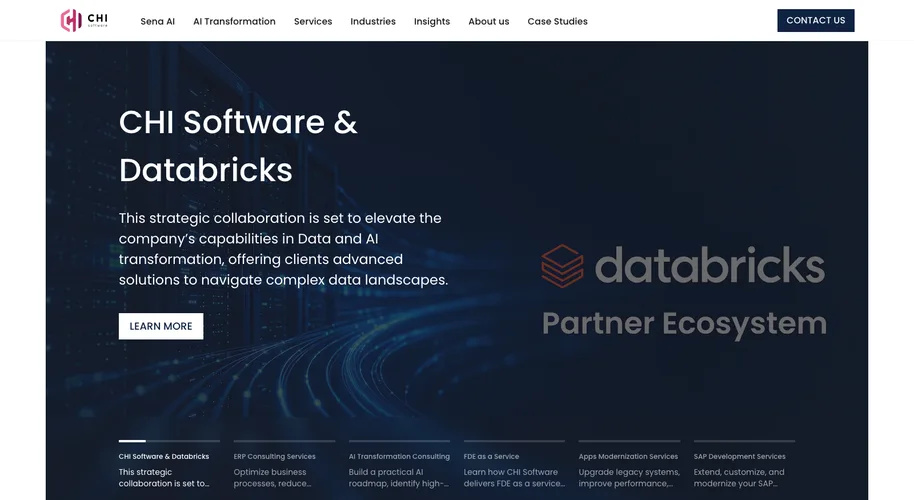
Migrating off an aging monolith is a different skill from launching something new, and it rewards a vendor who understands modernization risk over one who's just fast at greenfield work. CHI Software, founded in 2006, runs a team of 800-plus specialists across offices including Cyprus, Ukraine, Poland, and Spain.
Fintech capabilities: The modernization work spans:
Compliance/security evidence: CHI Software became ISO 27001 and ISO 9001 certified in late 2021. Confirm current certification scope and audit date before contracting, since this is a comparatively recent certification relative to some other vendors on this list.
Proof point: A modernization-first specialization built for multi-year relationships rather than a single delivery milestone, a good fit for fintech platforms that need sustained architectural evolution.
What to verify: The exact fintech expertise of the delivery team assigned to your project. Its public fintech case-study documentation runs thinner than several other vendors here, so ask directly for named financial-workflow examples before you shortlist it.
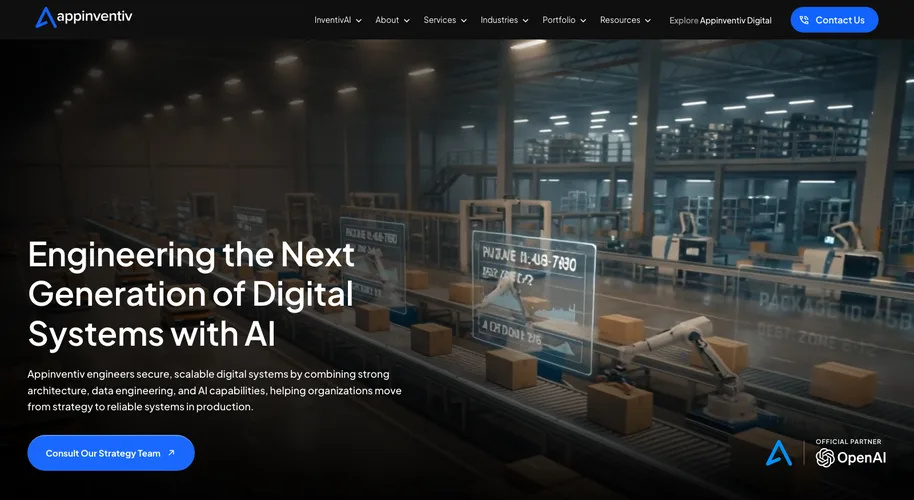
App-store ratings and daily engagement are what consumer fintech products live or die on, and that takes mobile-product depth, not just backend engineering. Appinventiv, founded around 2014-2015 and headquartered in Noida, India, runs a team of 1,700-plus people with additional offices in New York and London.
Fintech capabilities: The portfolio spans:
Compliance/security evidence: Appinventiv states its security practices align with ISO 27001 and reports CMMI Level 3 process-maturity certification; confirm current certification scope and regional compliance experience directly.
Proof point: A full-stack mobile fintech portfolio spanning payments, wallets, and neobanking apps, backed by the team scale to support larger product organizations.
What to verify: Evidence relevant to your project's particular financial workflow. Broad portfolio scale is not a proxy for fit, no matter how it's presented in a pitch deck.
Back to topTen strong options don't tell you which one to call first. That comes down to matching what you're building against the specific workflow evidence each vendor actually has, not review-site rank. Here's the matrix that turns the profiles above into a starting shortlist by product type:
If you are building... | Prioritize | Companies to examine first |
Digital bank / neobank | Core banking, ledger, KYC/AML, card and payment integrations | Kindgeek, GMO-Z.com RUNSYSTEM |
Payments / digital wallet | PCI exposure, transaction reliability, reconciliation | Kindgeek, ScienceSoft |
Lending / mortgage platform | Loan workflows, underwriting, servicing, regulatory logic | Django Stars, GMO-Z.com RUNSYSTEM |
Open banking product | API integration, consent and data architecture, security | Geniusee, Netguru |
Consumer fintech app | UX, mobile performance, product discovery | Netguru, Appinventiv |
Legacy banking modernization | Integration, migration, architecture, DevOps | Itransition, ELEKS, CHI Software |
AI-powered financial product | Data governance, model integration, explainability | ELEKS, CHI Software |
APAC financial transformation | Regional delivery capability and BFSI expertise | GMO-Z.com RUNSYSTEM |
Shortlist by product type first, then narrow using regulatory exposure, integration requirements, and delivery model. A vendor that fits a digital-wallet project on paper isn't automatically right for a mortgage-servicing platform, even though both fall under "fintech" on paper too.
Don't stop at this table, though. It narrows the field; it doesn't replace the vetting work covered next.
Back to topChoosing well starts with your regulatory exposure, not a feature comparison. The five steps below build a vendor-evaluation framework worth reusing on the next project too.
Map what actually governs your product before you get anywhere near frameworks or hourly rates:
Different fintech products create different compliance obligations. A vendor's "fintech experience" only counts if it matches your specific regulatory surface, not some other country's or vertical's version of it.
"We have fintech experience" is not an answer. Push for specifics:
A real answer to that last question — one involving retries, idempotency (ensuring a repeated request doesn't duplicate a transaction), or a specific incident — tells you the vendor has actually run production financial systems. A vague answer means keep looking.
Don't trust the sales page. Check each of the following directly with the vendor:
A certification covering "software development services" broadly is not the same thing as one scoped specifically to the system handling your customers' financial data. That distinction matters more than it sounds like it should.
Fintech products live or die on how they behave when a dependency fails. Probe experience with:
Then ask the harder question: how do the vendor's systems handle event-driven transaction processing, retries and idempotency, reconciliation, and incident recovery when one of those dependencies actually goes down?
Look past the sales presentation to the team that will actually do the work. Verify each of the following before signing:
A simple weighted scorecard keeps this from turning into a gut-feel decision:
Vendor score = domain fit (30%) + compliance and security (25%) + engineering capability (20%) + delivery fit (15%) + cost (10%)
Price matters, but weighting it below domain fit and compliance risk is deliberate. A vendor that's 15% cheaper and misses a compliance requirement ends up costing far more than 15% once remediation and a delayed launch enter the picture.
A vendor can score well on everything above and still carry deal-breaking risk that only shows up in the fine print. Six warning signs to watch for:
Any one of these is a reason to ask harder questions. Two or more together, and it's time to walk away — no matter how polished the rest of the proposal looks.
Back to topFintech pricing tracks regulatory scope, integration count, and financial complexity far more than screen count or feature list. A simple internal tool and a KYC-compliant onboarding flow can look nearly identical in UI (user interface) footprint. They still land at very different prices, because the second one carries compliance architecture the first never needed.
The table below gives indicative budget ranges by project type. Treat these as industry-typical estimates, not fixed quotes; actual cost depends heavily on your specific compliance scope and integration list.
Project type | Typical scope | Indicative budget |
Discovery / prototype | Product validation, architecture, compliance discovery | 15,000-40,000 |
Fintech MVP | Core workflows plus selected integrations | 50,000-150,000 |
Production-ready regulated product | Security, compliance, integrations, monitoring, QA | 150,000-400,000+ |
Enterprise modernization | Legacy migration, multiple systems, compliance, long-term delivery | Usually highly custom, often 400,000-1,000,000+ annually |
These figures reflect commonly cited 2026 industry ranges (Bolder Apps, Cleveroad, Trio) rather than one confirmed source. Quotes vary by vendor and scope, so confirm current pricing directly with any shortlisted vendor.
Regional rate positioning adds another variable on top of project type, according to industry rate guides:
Fintech work also commonly carries a domain premium over general software rates at the same seniority level. Reconciliation logic, ledger integrity, and KYC/AML workflows demand different failure-mode thinking than a typical CRUD (create, read, update, delete) application, and that shows up in the rate. PCI DSS compliance work alone can add 15,000-50,000 in initial implementation cost on top of core development.
That regional gap is exactly why total cost, not hourly rate, is the number worth comparing:
Total fintech cost = core development + financial integrations + security/compliance + QA/testing + infrastructure + ongoing operations
The vendor quoting the lowest hourly rate rarely delivers the lowest total project cost. Compliance gaps, failed integrations, and post-launch rework tend to erase whatever the lower rate saved upfront. Same argument as everywhere else in this article: evidence beats price, and that goes for the pricing conversation too.
Back to topMost "top fintech software development companies" lists reward whoever has the biggest marketing budget, not whoever actually shipped your specific workflow. Closing that gap is the whole point of this comparison: ten companies evaluated on named case studies, verifiable certifications, and financial-engineering depth—not review-site stars or a self-published ranking.
Call the vendor whose proof points match your product, not the one sitting at the top of the table. Maybe that's BFSI-grade compliance discipline paired with APAC delivery capacity for a lending platform or a digital-banking system that needs to move from three-day approvals to same-day processing. Either way, that fit is worth a direct conversation. Talk to GMO-Z.com RUNSYSTEM's team about which delivery model fits your compliance requirements (scope and pricing vary by engagement, contact RunSystem for a quote).
Back to topA focused fintech MVP typically takes 12 to 20 weeks. A production-ready regulated product, with full KYC, payment integrations, and compliance architecture, can take 6 to 12 months. Timeline tracks integration count and compliance scope far more than team size.
In most outsourcing contracts, the client owns all source code and intellectual property upon full payment. That has to be explicit in the contract, though, not assumed. Confirm IP (intellectual property) assignment terms, including any third-party libraries, before signing.
A typical fintech team includes:
Regulated products also benefit from a dedicated security architect who's involved from the design phase, not bolted on after launch.
A dedicated team model suits most regulated fintech products best, since requirements keep evolving as compliance and integration details surface mid-project. Fixed price works for narrowly scoped discovery phases. Time and materials fits ongoing modernization, where scope is open-ended by nature.
Back to top